Vastu-Friendly Interior Design Tips for New Homes in Delhi
Moving into a new home in Delhi is one of the most exciting milestones in life. But before the furniture arrives and the walls get painted, one question often comes up in almost every Delhi household: “Is this Vastu-compliant?”
And rightly so. Vastu Shastra — the ancient Indian science of space, direction, and energy — has guided home design for thousands of years. Today, it remains deeply rooted in how Delhi families plan and live in their homes, from a 2BHK flat in Dwarka to a luxury villa in Vasant Vihar.
The good news? Vastu principles and modern interior design are not opposites. When applied thoughtfully, they complement each other beautifully — creating homes that feel balanced, peaceful, and visually stunning at the same time.
This complete guide walks you through room-by-room Vastu-friendly interior design tips specifically for new homes in Delhi, along with practical advice on how to apply them without compromising on style or budget.
What Is Vastu Shastra and Why Does It Matter for Interior Design?
Vastu Shastra is a 5,000-year-old Indian architectural science that focuses on the relationship between a living space and the five natural elements — earth (Prithvi), water (Jal), fire (Agni), air (Vayu), and space (Akasha).
The core belief is simple: when a home is designed in harmony with these natural forces and the eight directions (North, South, East, West, and their intermediates), it promotes positive energy, health, prosperity, and mental peace for the people living in it.
For new homeowners in Delhi, Vastu is particularly relevant because:
- Delhi’s climate and geography align closely with Vastu directional principles (especially East-facing sunlight and North wind patterns)
- Most builders and architects in Delhi NCR now design floor plans with basic Vastu compliance in mind
- Buyers increasingly ask for Vastu-compliant homes, especially in South Delhi, Noida, and Gurgaon markets
But buying a Vastu-compliant structure is only half the work. How you design the interiors — where you place furniture, what colours you use, how light enters each room — determines whether the Vastu energy of your home truly works for you.
Room-by-Room Vastu Interior Design Tips for Delhi Homes
1. Main Entrance (The Most Important Vastu Zone)
The main entrance is the mouth of your home — it is where all energy enters. Getting this right is the single most impactful Vastu decision in interior design.
Direction: The ideal entrance for Delhi homes faces North, East, or Northeast. These directions invite sunlight, fresh air, and positive energy in the morning — a key Vastu principle.
Interior Design Tips:
- Keep the entrance well-lit at all times — add warm LED downlights or a statement pendant light
- Use a solid, sturdy main door (teak or sheesham wood is considered auspicious)
- Place a nameplate or house number clearly on the right side of the door
- Add a small Ganesha idol or sacred symbol at the entrance — but avoid placing it directly facing the door
- Use earthy, warm tones like beige, cream, or light wood for the entrance wall — avoid black or dark grey
- A small console table with fresh flowers or a potted plant on the left side of the entrance activates positive energy flow
- Avoid placing mirrors directly facing the main door — they reflect energy back out
What to Avoid: Clutter, broken items, or a shoe rack directly visible from the main entrance. If space is limited, use a closed shoe cabinet instead.
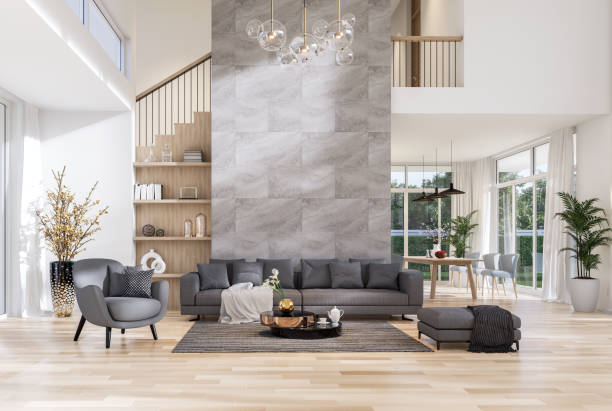
2. Living Room (Social and Financial Energy)
The living room in Vastu represents the social and financial energy of the household. Its design affects relationships, career success, and the overall mood of the family.
Direction: The living room ideally sits in the North, East, or Northwest zone of the home.
Interior Design Tips:
- Place the main sofa or seating against the South or West wall — occupants should ideally face North or East when seated
- Use a rectangular or square sofa arrangement — L-shaped sofas work well when placed in the Southwest corner
- Colours: White, yellow, light green, and cream are ideal for living room walls in Vastu. Avoid deep red or black as dominant wall colours
- Place a mirror on the North wall to attract prosperity energy — North is governed by Kubera (god of wealth)
- Television and electronic items belong in the Southeast corner of the living room (fire zone)
- Add indoor plants like money plant, bamboo, or peace lily in the Northeast or East corner
- Heavy furniture like bookshelves or storage units should go in the South or West — never Northeast
- Use ambient lighting from the South or West side — harsh overhead lighting directly in the centre disturbs the energy balance
Pro Tip for Delhi Flats: If your living room has a balcony facing East or North, keep it open and uncluttered. This is your home’s primary source of morning energy — do not block it with heavy curtains or bulky furniture.
3. Master Bedroom (Rest, Relationships, and Health)
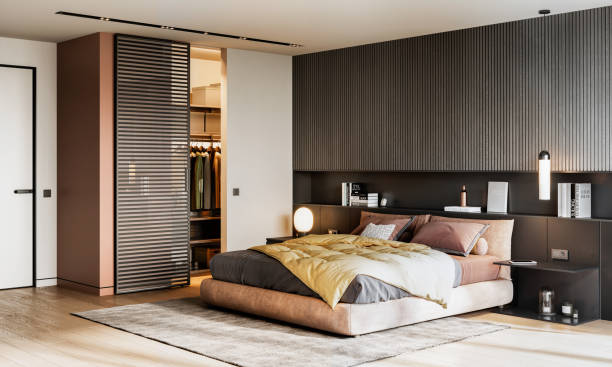
The master bedroom is the most personal space in your home. Vastu considers it a sanctuary for rest, health, and the relationship between partners.
Direction: The Southwest is the ideal location for the master bedroom — it represents stability, strength, and grounding energy.
Interior Design Tips:
- The bed head should point South or West — sleeping with your head pointing South is considered the healthiest position in Vastu (aligned with Earth’s magnetic field)
- Never place the bed directly under a beam — it creates mental pressure. If unavoidable, use a false ceiling to visually neutralise the beam
- Keep the space under the bed completely clear — no storage boxes, as they block energy flow
- Colours: Soft, warm tones work best — blush pink, ivory, warm beige, olive green, or muted terracotta. Avoid bright red or sharp orange
- Wardrobes and heavy storage should be on the South or West wall
- Avoid placing a mirror directly facing the bed — it is believed to disturb sleep and create restlessness
- If you have an attached bathroom, keep the door closed at night and use a solid (not transparent) bathroom door
- Avoid electronics like televisions in the bedroom if possible. If needed, place in the Southeast corner and cover when not in use
Design Tip: A four-poster bed or upholstered headboard in warm wood tones placed against the South wall creates both a Vastu-compliant and visually elegant focal point.
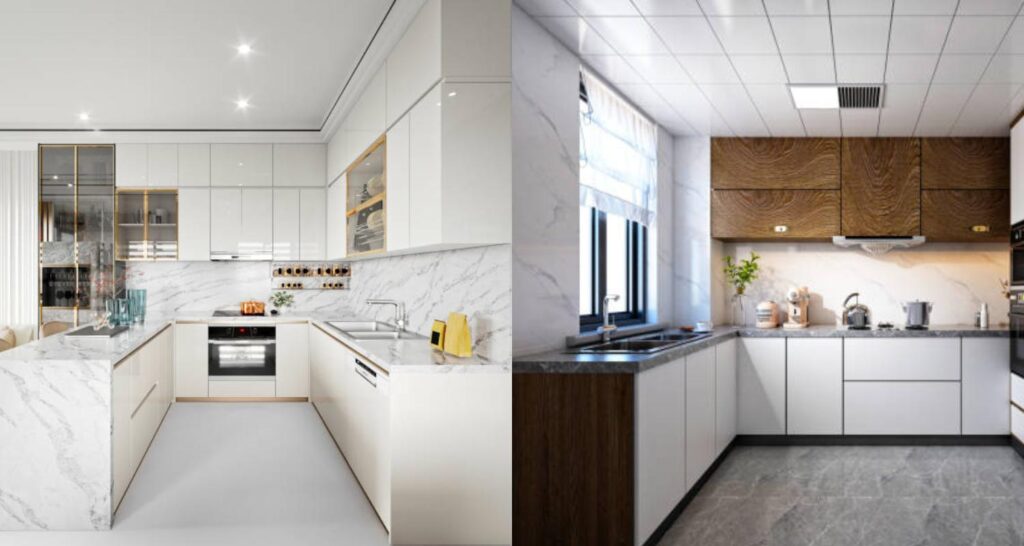
4. Kitchen (Health, Nourishment, and Prosperity)
In Vastu, the kitchen is directly linked to the health and financial wellbeing of the family. Its design must balance the fire element carefully.
Direction: The Southeast is the ideal kitchen location — it is governed by Agni (fire), which aligns perfectly with cooking.
Interior Design Tips:
- The cooking stove or hob should be placed in the Southeast corner — the cook should face East while cooking
- Sink and water fixtures go on the Northeast or North side (water element) — keep them away from the stove (fire element)
- Refrigerator belongs in the Southwest or Northwest — never in the Northeast corner
- Use bright, clean colours: white, light yellow, orange, or green. These activate appetite and positive energy
- Ensure excellent ventilation — a chimney or exhaust fan is not just practical but Vastu-essential (removes negative air energy from cooking)
- Storage should be on the South or West wall of the kitchen
- Avoid dark or black modular kitchen designs in Vastu-sensitive homes — if you love dark kitchens, balance with bright countertops and under-cabinet lighting
- Keep the kitchen clean and clutter-free at all times — a messy kitchen directly impacts financial energy in Vastu
Popular Delhi Trend: Many interior designers in Delhi NCR now create modular kitchens with a Southeast-facing hob, a marble or quartz island in the centre (neutral element), and light oak cabinetry — fully Vastu-compliant while looking strikingly modern.
5. Children's Room (Learning, Growth, and Focus)
Direction: West or Northwest is ideal for children’s rooms.
Interior Design Tips:
- Study table should face East or North — children should face these directions while studying for better concentration and memory retention
- Bed should be placed with the head pointing East or South
- Use bright, stimulating colours: sky blue, light green, yellow, or lavender — these encourage creativity and learning
- Place bookshelves on the East or North wall — never the South
- Avoid placing a mirror directly in front of the study desk
- Keep toys and recreational items in the Northwest corner
- Good natural light from the East is a major Vastu plus for children’s rooms
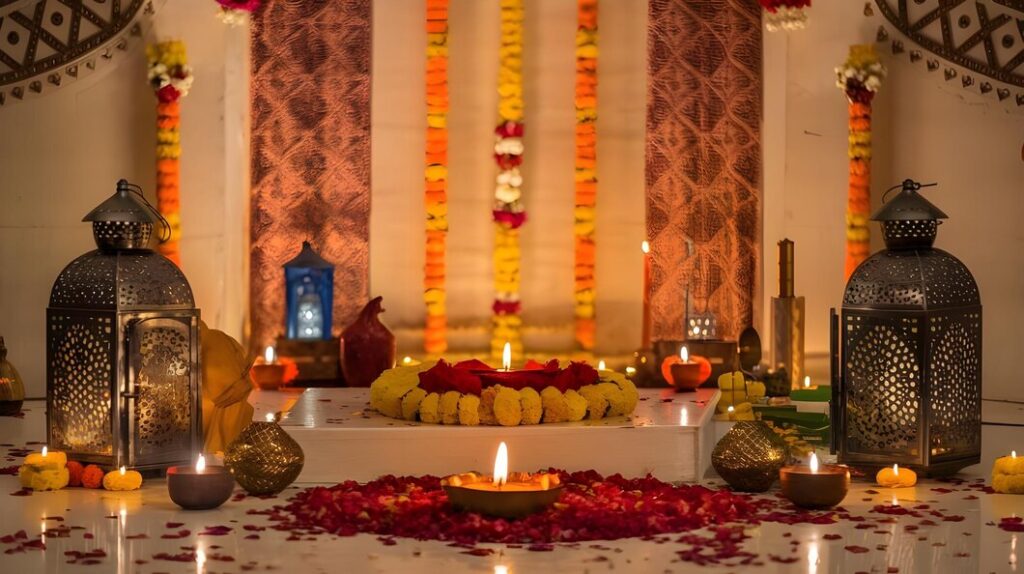
6. Pooja Room (Spiritual Energy Centre)
No discussion of Vastu interior design in Delhi is complete without addressing the pooja room — a sacred space present in almost every Delhi home.
Direction: Northeast is the ideal direction — it is considered the most spiritually charged zone of any home.
Interior Design Tips:
- Idols and sacred images should face West or South — the person praying faces East or North
- Keep the pooja room at a lower level than the main living areas if possible
- Use white marble, light yellow, or soft cream for the pooja room walls and flooring
- Ensure proper ventilation and natural light
- Avoid placing the pooja room adjacent to or above the toilet/bathroom
- Use soft, warm lighting — avoid harsh fluorescent light in this space
- Keep the pooja room free of clutter and non-sacred items
7. Bathroom and Toilets (Eliminating Negative Energy)
Bathrooms are often overlooked in Vastu, but their placement and design matter significantly.
Direction: Northwest or West for bathrooms. Avoid Northeast, Southeast, or Southwest.
Interior Design Tips:
- Keep bathroom doors closed at all times
- Use light, neutral colours: white, light grey, or pale blue
- Ensure excellent ventilation — a window or exhaust fan is essential
- The toilet seat should ideally face North or South — never East or West
- Avoid placing mirrors on the North or East wall of the bathroom — these directions are energy-positive and mirrors can scatter that energy
Vastu Colours Guide for Delhi Homes (Quick Reference)
Room | Vastu-Recommended Colours | Colours to Avoid |
Main Entrance | Cream, beige, light green, wood tones | Black, dark grey |
Living Room | White, yellow, light green, cream | Deep red, black |
Master Bedroom | Blush pink, ivory, warm beige, olive | Bright red, neon |
Kitchen | White, light yellow, orange, green | Dark navy, black |
Children’s Room | Sky blue, yellow, green, lavender | Dark or dull tones |
Pooja Room | White, cream, light yellow | Black, dark blue |
Bathroom | White, light grey, pale blue | Red, dark colours |
Common Vastu Mistakes in Delhi Home Interiors (And How to Fix Them)
- Mirror Facing the Bed Very common in modern bedroom designs. Solution: relocate the mirror to a side wall, or use a wardrobe with inside-fitted mirrors.
- Kitchen in the Northeast If your builder has placed the kitchen in the Northeast (which violates Vastu), compensate by using fire-toned accents (orange, red accessories) in the Southeast of your kitchen to shift the energy balance.
- Dark Entrance Many Delhi flats have entrance lobbies with no natural light. Fix this with warm layered lighting, a large mirror on a side wall (not facing the door), and light-coloured walls.
- Heavy Furniture in the Northeast Northeast must remain light, open, and uncluttered. Move any heavy storage or furniture to the Southwest or South wall.
- Toilet in the Northeast This is considered the most serious Vastu defect. If unavoidable, keep it extremely clean, use a heavy door that stays shut, and place a Vastu pyramid or rock salt bowl inside to neutralise negative energy.
Can Modern Interior Design Be Vastu-Friendly?
Absolutely — and this is where expert interior designers make all the difference.
Modern interior design trends like minimalism, Japandi style, biophilic design, and warm maximalism actually align quite naturally with Vastu principles:
- Minimalism supports clutter-free, open spaces (core Vastu requirement)
- Biophilic design (indoor plants, natural materials) directly supports Vastu’s five-element philosophy
- Warm neutral palettes (currently trending in Delhi NCR homes) match Vastu colour recommendations perfectly
- Japandi style (Japanese + Scandinavian blend) promotes calm, balance, and natural light — all Vastu-positive qualities
The key is working with an interior designer who understands both modern design principles and Vastu fundamentals — so that your home looks stunning and feels right.
FAQ
Q1. Is Vastu only for Hindu homes?
No. Vastu Shastra is a science of space and energy, not a religion. Many people of all faiths follow Vastu principles because they are fundamentally about good spatial planning, natural light, ventilation, and energy flow.
Q2. Can Vastu defects be corrected without demolition?
Yes. Most Vastu issues in existing homes can be corrected through interior design — by repositioning furniture, changing colours, adding plants, using mirrors strategically, or placing Vastu remedies.
Q3. What is the most important Vastu tip for a new Delhi home?
Ensure your main entrance faces North, East, or Northeast, and keep it well-lit, clean, and welcoming. This single step has the most impact on the energy of the entire home.
Q4. Is an East-facing house the best in Vastu? East-facing homes are considered very auspicious in Vastu because they receive morning sunlight, which is energising and health-promoting. However, North-facing homes are equally good, especially for business owners and professionals.
Q5. How do I find a Vastu-friendly interior designer in Delhi?
Look for an interior design firm that has experience working on homes in Delhi NCR and understands the combination of modern aesthetics and Vastu principles. Ask to see their portfolio and check if they have handled Vastu-specific client requirements before.
Q6. Does Vastu affect resale value of a home in Delhi? Yes. Vastu compliance is increasingly a factor in Delhi’s real estate market. Homes with Vastu-compliant interiors and layouts tend to attract more buyers and often command a premium, especially in South Delhi, Noida, and Gurgaon.
Conclusion
Vastu-friendly interior design is not about being rigid or superstitious — it is about designing a home that works with nature, light, space, and energy to create an environment where you and your family can truly thrive.
For new homeowners in Delhi, applying Vastu principles during the interior design phase is far easier (and less expensive) than trying to fix things later. The room-by-room tips in this guide give you a solid foundation to start with.
If you want expert help creating a home that is both beautifully designed and Vastu-compliant, MM Design Studio — based in Jasola, New Delhi — specialises in exactly this. With projects across Delhi NCR including residential, commercial, restaurant, and office interiors, the team brings together modern design sensibility and deep knowledge of spatial planning principles to deliver spaces that look exceptional and feel right.